
Obesity Treatment and Weight Loss: A Personalized Path to Better Health

Medically reviewed by Vikram Tarugu, MD, board-certified gastroenterologist. Last updated November 2026.
Obesity is a chronic health condition, not a personal failure or simply a matter of willpower.
For many people, successful weight loss requires a personalized plan, ongoing support, and sometimes medical or procedural treatment.
Body mass index, or BMI, is one tool used to screen for excess weight.
A BMI of 25 to 29.9 is considered overweight.
A BMI of 30 or higher is considered obesity.
BMI does not tell the full story, so waist size, medical history, symptoms, and health goals also matter.
Why Treat Obesity?
Obesity can raise the risk of type 2 diabetes, high blood pressure, heart disease, sleep apnea, joint problems, and certain cancers.
It can also contribute to metabolic dysfunction-associated steatotic liver disease, previously called fatty liver disease.
As a Florida gastroenterologist team, we often see how excess weight can affect liver health, acid reflux, and overall digestive wellness.
The good news is that even modest weight loss can make a meaningful difference.
Losing as little as 5% of your starting body weight may improve blood sugar, blood pressure, cholesterol, mobility, sleep, and energy.
For example, a person who weighs 200 pounds may see health benefits after losing 10 pounds.
Infographic: The Health Benefits of Weight Loss
5% weight loss may help improve:
- Blood sugar and diabetes prevention
- Blood pressure and cholesterol
- Fatty liver disease
- Sleep apnea symptoms
- Joint comfort and mobility
- Energy, mood, and quality of life
A Complete Approach to Obesity Treatment
There is no single “best diet” or one-size-fits-all plan for weight loss.
The best plan is one that fits your health needs, daily routine, food preferences, and long-term goals.
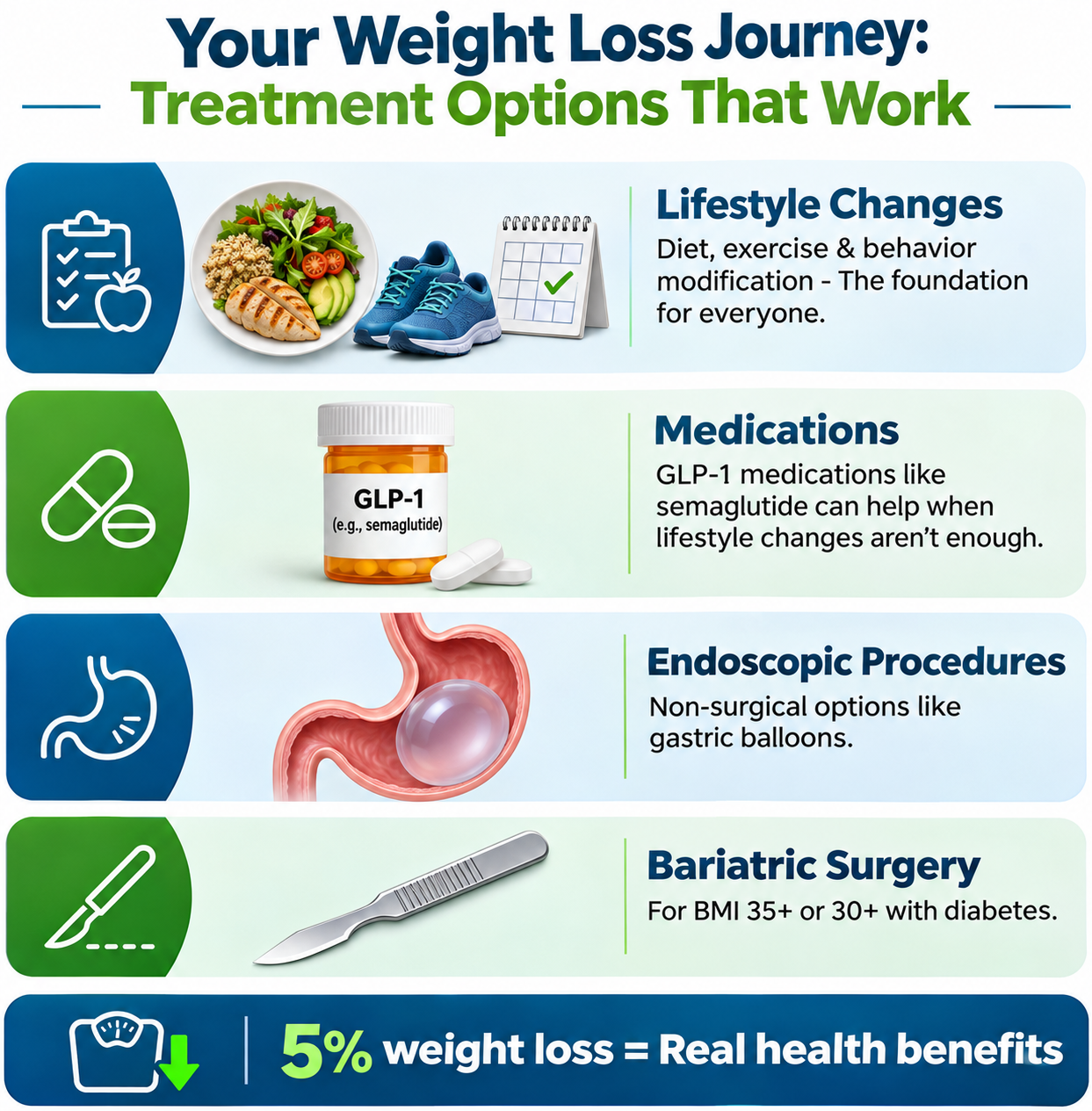
Lifestyle changes remain the foundation of obesity treatment.
This includes choosing a reduced-calorie eating pattern that is realistic and satisfying.
Regular physical activity helps support heart health, preserve muscle, and maintain weight loss.
Behavioral tools, such as tracking meals, activity, and weight, can help identify habits and build consistency.
Many people benefit from working with a structured weight-management program.
Regular follow-up creates accountability and allows the plan to be adjusted when challenges arise.
Medications for Weight Loss
GLP-1 medications have changed the conversation around medical weight loss.
Medications such as semaglutide and tirzepatide can reduce appetite, help people feel full sooner, and support significant weight loss when combined with lifestyle changes.
GLP-1 medications may be appropriate for some adults with obesity or for those who are overweight and have weight-related health conditions.
These medications are not right for everyone, and treatment should be individualized based on medical history, side effects, insurance coverage, and personal goals.
Weight-loss medications are often long-term treatments.
Stopping them can lead to weight regain for many people, which reflects the chronic nature of obesity rather than a lack of effort.
Endoscopic and Surgical Options
For some patients, devices or procedures may be part of an effective weight-loss plan.
Intragastric balloons take up space in the stomach and can help a person feel full with less food.
Endoscopic sleeve gastroplasty is a nonsurgical procedure that reshapes the stomach from the inside using an endoscope.
Metabolic and bariatric surgery may be an option for people with more severe obesity or obesity-related conditions such as type 2 diabetes.
These treatments can lead to greater weight loss and may improve diabetes, high blood pressure, and fatty liver disease.
Why Weight Regain Is Common
Weight regain is common and does not mean you have failed.
After weight loss, the body may increase hunger signals and use less energy in an effort to return to its previous weight.
This is sometimes called the body’s “set point.”
Long-term success usually requires ongoing support, healthy routines, physical activity, and, for some people, continued medication or procedural care.
A compassionate, science-based approach is more helpful than blame.
If you are looking for weight loss support or obesity treatment in Okeechobee or Wellington, Florida, our gastroenterology team can help you explore options that support your digestive health, liver health, and long-term wellness.
Leave a Reply