
GLP-1 Weight Loss Medications in 2027: What’s Available, What’s Next, and Practical Patient Answers

Medically reviewed by Vikram Tarugu, MD, board-certified gastroenterologist. Last updated November 2026.
GLP-1 weight loss medications have changed the conversation around obesity treatment.
These medications are not simply “weight loss injections”; they are prescription therapies that work on appetite, fullness, digestion, blood sugar regulation, and long-term metabolic health.
For appropriate patients, semaglutide and tirzepatide can support meaningful weight loss when combined with nutrition, activity, strength training, and long-term follow-up.
Semaglutide and tirzepatide remain the leading FDA-approved options for chronic weight management.
Semaglutide is a GLP-1 receptor agonist that helps patients feel full sooner, reduces hunger, and slows stomach emptying.
Tirzepatide works on both GLP-1 and GIP pathways and has produced even greater average weight loss in many studies.
In clinical trials, semaglutide has been associated with approximately 15% average body-weight reduction, while tirzepatide has produced average reductions near 20% or more for some patients.
Individual results vary based on dose tolerance, nutrition, activity, medical conditions, and medication consistency.
The Current State of GLP-1 Weight Loss Treatment
Today’s GLP-1-based obesity medications are helping many patients manage obesity as the chronic medical condition it is.
They can also improve blood sugar control in patients with type 2 diabetes and may benefit certain patients with cardiovascular disease, sleep apnea, fatty liver disease, and other weight-related conditions.
These medications work best as part of a complete plan.
Adequate protein, hydration, fiber, resistance exercise, sleep, and regular follow-up are important because reduced appetite can also reduce intake of nutrients needed to preserve muscle and overall health.
Weight regain is common when treatment stops, so successful obesity treatment often requires a long-term strategy rather than a short-term fix.
Retatrutide: The Potential Next Step in Obesity Treatment
Retatrutide is one of the most closely watched medications in obesity treatment for 2025 and 2026.
It is sometimes called a “triple agonist” because it targets GLP-1, GIP, and glucagon receptors.
This three-pathway approach may influence appetite, blood sugar, fat metabolism, and energy use.
In clinical trials, retatrutide has shown the potential for approximately 24% average weight loss at higher doses, which approaches the degree of weight loss seen with some bariatric procedures.
However, retatrutide remains investigational and is not currently FDA-approved for routine obesity treatment.
As with other GLP-1-based medications, nausea, vomiting, diarrhea, constipation, and other gastrointestinal side effects remain important considerations during dose escalation.
GLP-1 Weight Loss Medication FAQ
What if I miss a dose?
Instructions depend on the specific medication.
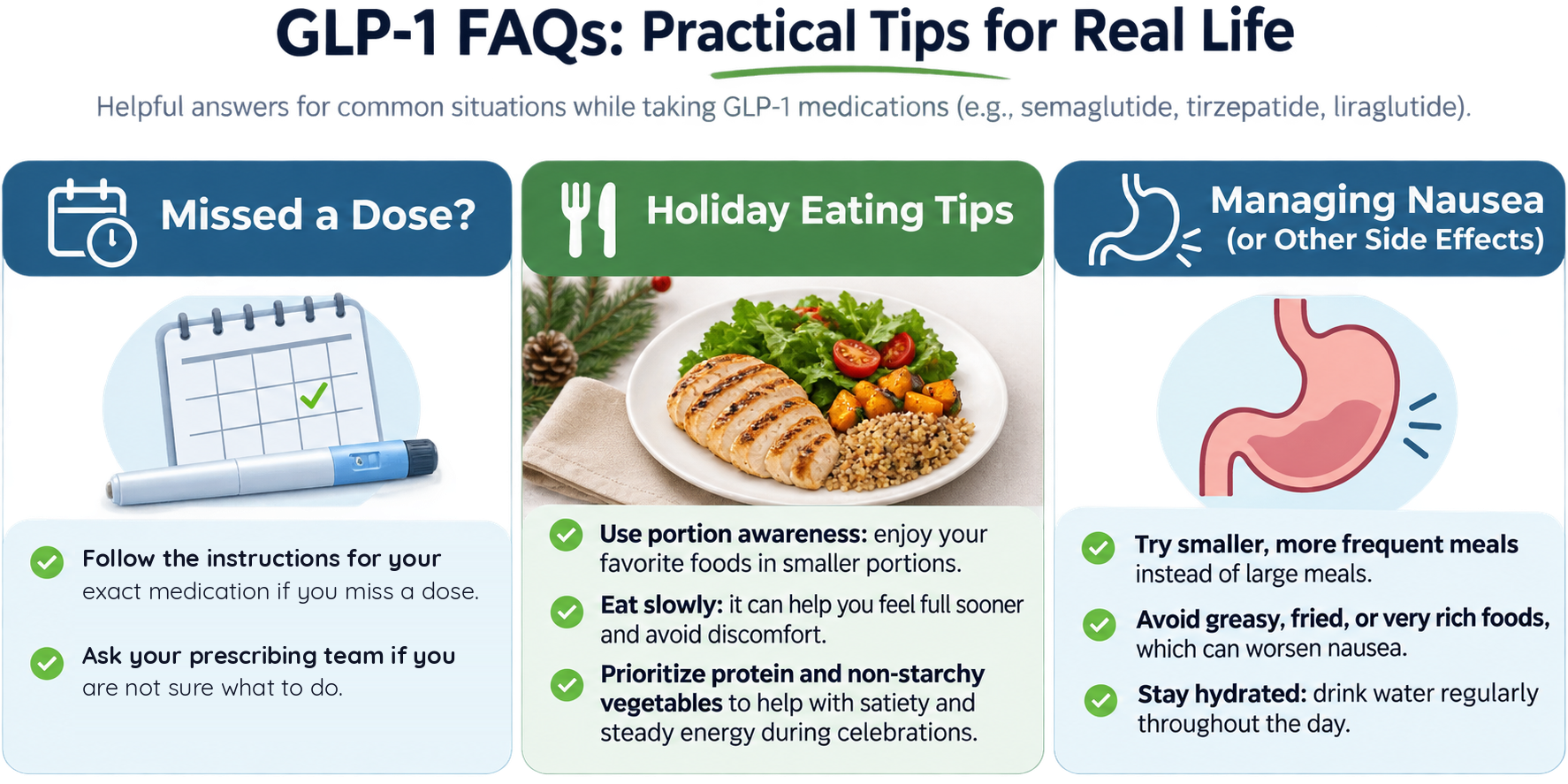
If you miss a dose, follow the instructions that come with your exact medication. If you are not sure what to do, contact your prescribing team.
Do not double up doses.
If multiple doses have been missed, restarting at the prior dose may worsen side effects, so contact the prescribing team before resuming.
Can GLP-1 medications be used during pregnancy?
No. GLP-1 weight loss medications should not be used during pregnancy, and they are generally avoided while breastfeeding because safety data are limited.
Patients planning pregnancy should discuss medication discontinuation early.
Semaglutide is commonly stopped at least two months before attempting conception, while tirzepatide is commonly stopped at least one month before attempting conception.
Effective contraception is important while taking these medications when pregnancy is possible.
What should I do if I have nausea, vomiting, constipation, or diarrhea?
Mild gastrointestinal side effects are common, especially after starting treatment or increasing the dose.
Helpful strategies include eating smaller meals, eating slowly, stopping at the first feeling of fullness, choosing lean protein, and avoiding greasy, fried, heavy, or very spicy foods.
Sip fluids throughout the day to prevent dehydration.
Constipation may improve with fluids, fiber as tolerated, movement, and a bowel regimen when needed.
Severe or persistent vomiting, severe abdominal pain, inability to keep fluids down, jaundice, or symptoms of dehydration require prompt medical attention.
How can I enjoy holidays and family dinners while taking GLP-1 medications?
Holiday meals do not require perfection or deprivation.
Start with protein and vegetables, serve yourself a smaller portion, and eat slowly.
Pause before going back for more because fullness signals may take time to register.
Avoid arriving overly hungry, limit alcohol if it worsens nausea or dehydration, and keep water available.
Do not skip prescribed medication simply because a holiday meal is planned.
Focus on enjoying family, conversation, and favorite foods in reasonable portions rather than making one meal an all-or-nothing event.
GLP-1 medications are creating new opportunities for people living with obesity, but the best treatment is individualized.
Medication selection should consider health history, goals, side effects, insurance access, pregnancy plans, and long-term sustainability.
Sources
- ClinicalTrials.gov, 2026
- Lancet, 2024
- Nature Reviews: Drug Discovery, 2025
- Endocrinology, Diabetes & Metabolism, 2024
- Diabetes Care, 2024
- The New England Journal of Medicine, 2023
- Obesity Pillars, 2025
- JAMA, 2026
- Endocrine Reviews, 2026
- Gastroenterology, 2022
- Food and Drug Administration, 2026
- Food and Drug Administration, 2026
- Food and Drug Administration, 2026
Leave a Reply